
How-To Guide · No Boat Required
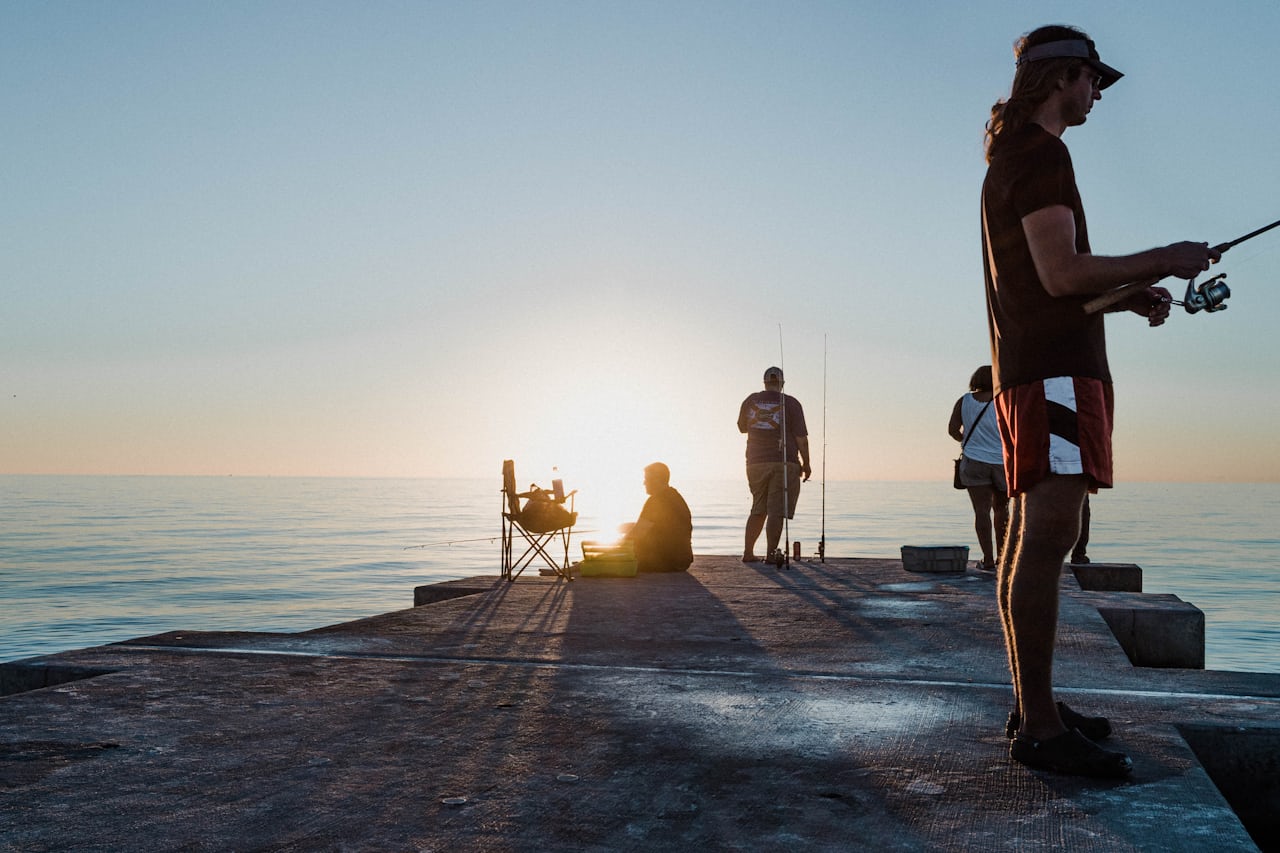
A fishing pier is the only place in Florida where you can walk from a parking spot to 25 feet of water in under three minutes, for the price of a sandwich. No trailer, no ramp queue, no fuel bill, no weather window. Florida pier fishing puts you over the same structure, bait and current that boats run miles to find — and on the right tide it out-fishes them.
The catch is that a pier is not one spot. It is three, stacked end to end, and most people fish all three the same way and wonder why the regulars two rails down keep bending rods. Here is how to read one, what to bring, and how to get a good fish up and over the rail once you hook it.
Do You Need a Fishing License on a Pier?
This is the single most-confused rule in Florida fishing, and getting it wrong is an expensive mistake. There are two separate exemptions and they are not interchangeable.
1. The pier license. A pier that holds a valid Florida saltwater pier license covers everyone fishing from it — you do not need your own recreational saltwater license. Most established public and municipal piers carry one, and several roll the fee into the entry price. This is the exemption that actually applies to most pier anglers.
2. The shoreline exemption. This one gets quoted constantly and almost always wrongly. It applies only to Florida residents, fishing in their home county, from land or a structure fixed to land, for noncommercial purposes, using live or natural bait, on poles or lines not equipped with a line-retrieval mechanism. That last clause is the killer: a spinning reel is a line-retrieval mechanism. Cane pole, yes. Your 4000-size Spinfisher, no. It also excludes fish management areas inside your home county.
So: if the pier is licensed, fish it. If it is not, and you are running a reel, you need a saltwater license — resident or not. When in doubt, ask at the bait shop before you pay, and check current rules at FWC.
Read the Pier Like a Spot: Three Zones, Three Fisheries
Walking straight to the end is the beginner move. The end is one of three fisheries and often the worst of them.
The Pilings (the first third)
Barnacle-crusted pilings in shallow water are a vertical reef. This is where flounder, sheepshead, mangrove snapper, black drum and juvenile snook live, and it is the most consistently productive water on the whole structure. You are not casting here — you are dropping straight down, tight to the wood, and being ready for a bite that feels like the bottom moved an inch.
Mid-Pier (the trough and the sand)
Past the pilings the bottom drops into a trough before it flattens. Pompano, whiting, croaker and more flounder work this band, and it is where the surf-fishing playbook translates directly — the same water our surf fishing beginner’s guide covers, just approached from above instead of standing in it.
The End (open water)
Deep, clear, current-swept. This is the pelagic zone: Spanish mackerel, king mackerel, bluefish, jacks, tarpon rolling through on the tide, and the occasional cobia. It is glamorous, it is streaky, and it is dead flat for hours between windows. Fish it when bait is showing on the surface; work the pilings when it is not.
🎥 Watch: pier & jetty fishing in Florida
Video: Captain Rick Murphy — Florida Insider Fishing Report.
The One Setup That Covers a Whole Pier
You can carry three rods or you can carry one that does 90% of it. For a pier you want reach — enough length to steer a fish around a piling and lift it clear — plus enough backbone to stop something that runs for the barnacles.
In practice that means a 7–8′ medium-heavy spinning rod like the Penn Battalion II, a 4000–6000 size sealed reel — the Spinfisher VII 5500 is the standard answer because salt spray on a pier is relentless — 20–30 lb braid (PowerPro or Sufix 832), and 30–40 lb fluorocarbon for leader. If you are building your first saltwater outfit from scratch, our inshore rod and reel combo guide and braided line breakdown go deeper on the why.
Best paired with: a pair of polarized glasses. From 20 feet up you can genuinely see fish holding on the pilings — that elevation is a pier’s biggest unfair advantage and it is wasted through untreated lenses. And on a long pier — Navarre and the Skyway are both serious walks — a pier cart with hard pier tires (not the balloon-wheel beach version) saves you three trips back to the car for rods, cooler and bait.
Four Rigs That Cover Everything
- The piling drop. A bucktail jig or a live shrimp on a light jighead, dropped flush against the wood and worked in one-foot lifts. Sheepshead, flounder, black drum, snapper.
- Knocker rig. Egg sinker sliding right down onto the hook. It gets bait to the bottom tight to structure and telegraphs a bite instantly. Pair with light circle hooks and do not swing on the bite — come tight and crank.
- Flatline or float, from the end. A live bait pinned on and drifted back with the current, no weight. This is the king mackerel, tarpon and cobia rig. Live bait beats everything here — our catching live bait guide covers filling the bucket first.
- The metal cast. When Spanish and blues bust bait off the end, a 1 oz Kastmaster or the classic Gotcha plug thrown into the melee and burned back is the whole technique. Add a short wire bite trace or accept that mackerel teeth will cost you lures.
Regulations Change by Species and by Coast
Piers put a lot of different species in front of you in one session, and the size and bag rules are not the same on the Gulf and the Atlantic — or in Monroe County. Rather than trust a number you read once, check it before you put a fish in the cooler:
For the two species most likely to cause a problem, we keep dedicated guides: snook season and slot rules and seatrout regulations. Snook in particular are a common pier catch during closed season — know how to release one properly.
Getting a Big Fish Up Twenty Feet
Here is where pier trips end badly. You fight a fish well, walk it to the rail, lift — and the leader parts or the hook pulls, because a fish that weighs nothing in the water weighs everything hanging in the air.
Do not lift a good fish by the line. Use a drop net — a hoop on a rope, lowered past the fish and lifted flat — or a pier gaff if you are keeping it. Most established piers have a communal net near the end, and the regulars will nearly always net a fish for a stranger if you ask before you need it, not during.
If you fish piers more than occasionally, owning one is the difference between landing the best fish of the day and watching it swim off with your leader. Look for an aluminium ring rather than steel — steel rusts through in a season of salt — and at least 40 feet of rope, because the deck on a high pier is further from the water than it looks. A collapsible aluminium-ring drop net folds flat against a rail and costs less than the rod you would otherwise be re-rigging.
For anything big enough to need one, walking the fish down the pier to the beach and landing it in the surf is often the smarter play — and on most piers it is the only realistic option for a shark or a tarpon. That is the same endgame as beach shark fishing.
Pier Etiquette (and What Actually Gets You Thrown Off)
- Give hooked fish the rail. When someone yells “fish on,” reel in. It is not optional, and it is the fastest way to be treated as a regular rather than a tourist.
- Cast straight out, never across. Crossed lines on a busy pier are how tackle gets cut.
- No casting over the end rail into the fighting zone when someone is working a big fish down the pier.
- Clean up. Discarded mono is the number-one killer of pelicans on Florida piers, and most piers have a mono recycling tube for exactly this reason.
- Check the local rules. Several piers ban shark fishing, chumming, or treble hooks outright, and enforcement is real.
Where to Go
The rock cousin of a pier is a jetty, and it fishes nothing like one — deeper water, harder current, and a real chance of going in. We covered how to work the four zones of a jetty, and which Florida jetties are actually open, in jetty fishing in Florida.
Florida has piers from Pensacola to the Keys and they are genuinely not interchangeable — one is a night mackerel and tarpon machine, another is a daylight pompano and whiting beach pier, and a couple of famous ones are currently closed for rebuild. We broke down the ones worth driving for, with what each is actually good at, in the best fishing piers in Florida.
If you would rather have someone else read the tide for you, a half-day inshore charter out of the same water is the fastest way to shortcut the learning curve — compare local captains and dates here. Otherwise, plan the trip by region: Tampa Bay, Southeast Florida, the Panhandle.
Bottom Line
Fish the pilings first and the end only when bait is showing. Bring one 7–8′ medium-heavy outfit with 20–30 lb braid instead of three specialist rods. Sort out the license question before you walk on — the pier license covers you, the shoreline exemption almost certainly does not. And never, ever lift a good fish by the leader.
Keep reading: best Florida piers · surf fishing guide · inshore basics · check regs and pick a setup.
Disclosure: some links here are paid. Buy or book through one and we earn a commission at no extra cost to you — it never affects which gear or captains we recommend. As an Amazon Associate we earn from qualifying purchases.